How Retainer Acrylic Stores Elastic Force
Retainer acrylic stores elastic force as a polymer network under strain, opposing tooth movement through continuous l...
Read it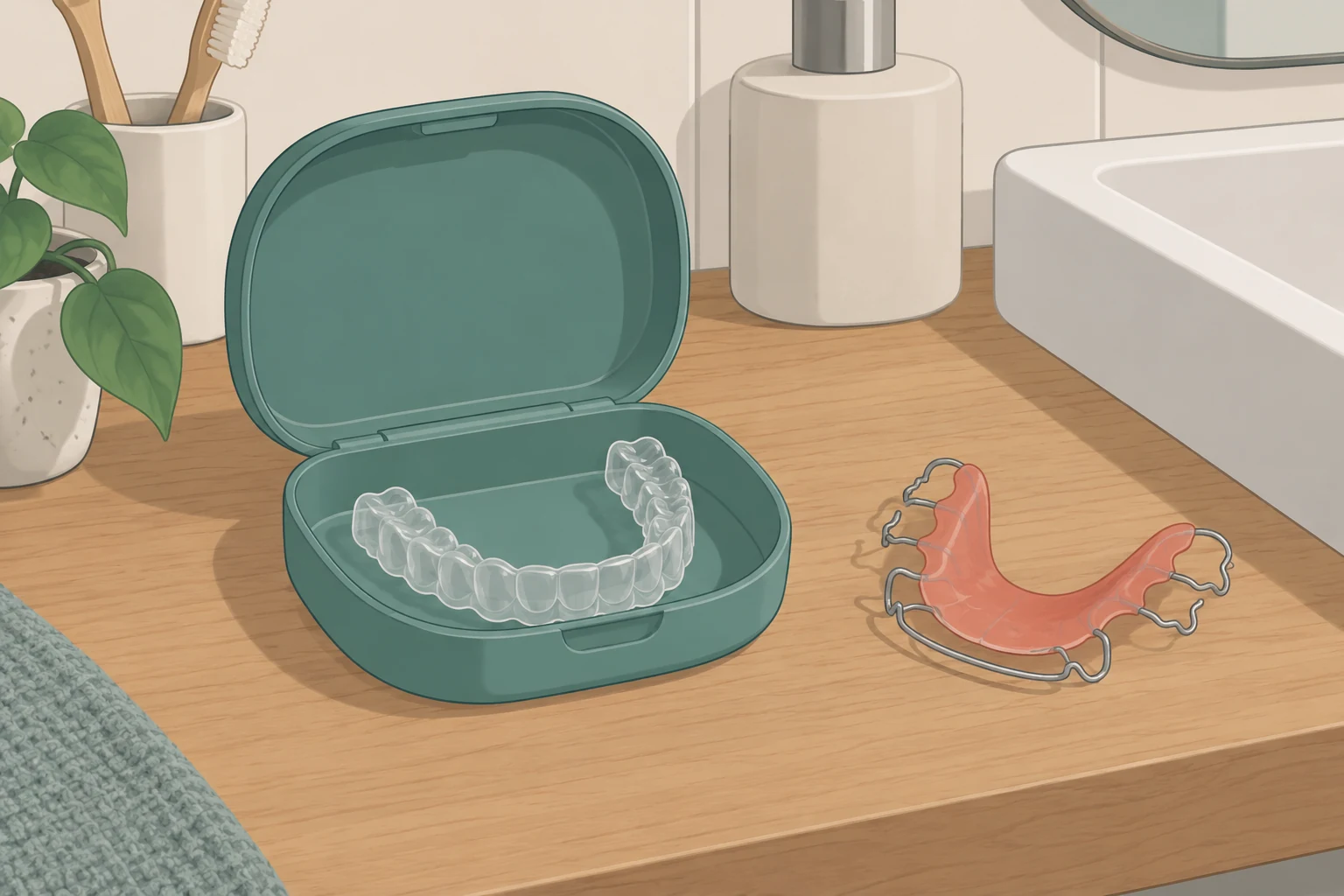
All Orthodontic Devices articles from Oral Care Made Clear.
Retainer acrylic stores elastic force as a polymer network under strain, opposing tooth movement through continuous l...
Read itTeeth bleaching chemistry relies on peroxide radicals oxidizing pigment molecules inside enamel and dentin, not on ab...
Read itRetainer clasps transfer elastic spring force across specific tooth surfaces, distributing retention load through geo...
Read itThermoplastic retainer materials undergo controlled viscoelastic creep that generates a sustained low-level force opp...
Read itThe materials science behind orthodontic archwires — how metal alloys generate sustained tension to move teeth.
Read articleThe biomechanics of orthodontic retainers — how they resist the natural forces that would otherwise shift teeth.
Read articleThe biomechanics behind clear aligners — how sustained pressure and bone remodeling actually shift tooth position.
Read article